Every January, the ancient imperial city of Gondar transforms into a sea of white. Timkat, the Ethiopian Orthodox celebration of Epiphany, is a vibrant, deeply spiritual three-day festival commemorating the baptism of Jesus Christ in the River Jordan.
While Timkat is celebrated throughout Ethiopia, nowhere does it reach the scale, fervor, and historical pageantry found in Gondar. Tens of thousands of pilgrims, priests, and visitors gather to witness ancient rituals set against the backdrop of 17th-century castles and imperial pools. It is an immersive sensory experience—a symphony of rhythmic chanting, jingling sistrums, and beating drums.
The Procession of the Tabots
The core of the Timkat celebration revolves around the Tabot. In the Ethiopian Orthodox faith, every church houses a Tabot, a sacred replica of the Ark of the Covenant. For 364 days of the year, it is kept hidden in the inner sanctum of the church, completely concealed from public view.
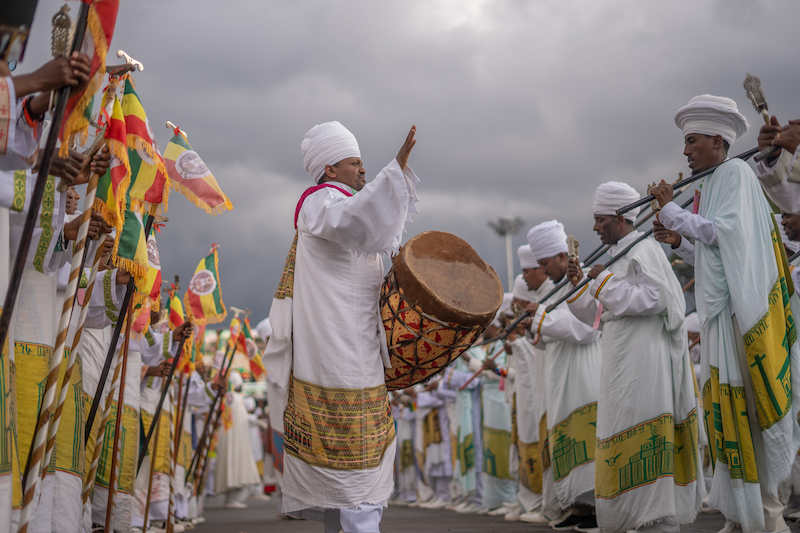
On the eve of Timkat, known as Ketera, the Tabots are finally brought out. Wrapped tightly in rich, brocaded silks and golden fabrics, they are carried on the heads of the highest-ranking priests. The streets of Gondar come alive as processions from various churches converge, marching slowly toward Fasilades' Bath. Priests dressed in dazzling ceremonial robes hold ornate crosses and brightly colored velvet umbrellas, while choirs of young men and women sing hymns passed down through millennia.
For three days, the streets of Gondar transform into a flowing river of white cotton, colorful umbrellas, and ancient chants.
Festival ObserverThe Night Vigil at Fasilades' Bath
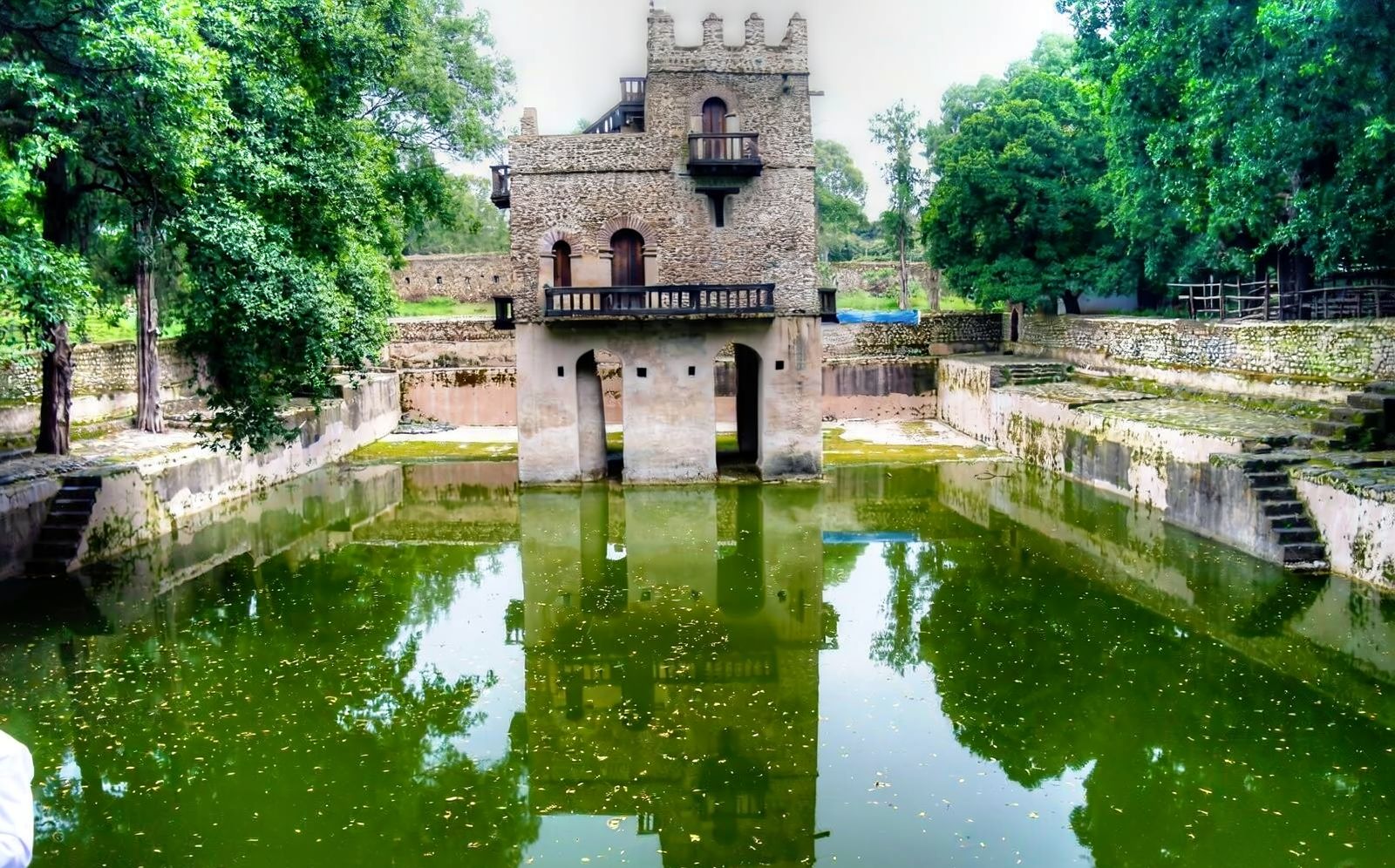
By sunset on Ketera, the Tabots arrive at their destination: the sunken pool of Fasilades' Bath. Built by Emperor Fasilades in the 1600s, this massive stone pavilion is surrounded by ancient, twisting fig trees and is filled with water specifically for this occasion.
The Tabots are placed in a special tent, and the devout prepare for a long night. Throughout the darkness, the area is illuminated by flickering candles. Priests maintain a constant vigil of prayer, chanting, and liturgy by the water's edge. The atmosphere is thick with the scent of burning frankincense and myrrh, creating a deeply mystical ambiance that bridges the gap between the ancient world and the present day.
The Morning Plunge
The climax of Timkat occurs on the morning of January 19th (or the 20th in leap years). As the sun rises over Gondar, the Patriarch or a senior bishop stands at the edge of Fasilades' Bath. Using a golden cross, he blesses the water and extinguishes a consecrated candle within it, symbolizing the baptism of Christ.
What happens next is pure joy. The solemnity of the night vigil erupts into celebration as the blessed water is splashed over the crowd. Almost instantly, hundreds of young men leap from the stone walls and the branches of the banyan trees directly into the pool. It is a symbolic renewal of their baptismal vows. The crowd cheers, women ululate, and the air is filled with laughter, singing, and splashing water.
Attending Timkat in Gondar
If you plan to visit Ethiopia, aligning your trip with Timkat is an exceptional idea. However, because Gondar is the epicenter of the celebration, hotels book up months in advance. Visitors should be prepared for massive crowds, loud festivities, and a truly immersive cultural experience. Wear respectful clothing—ideally a traditional white netela (scarf)—and prepare to witness one of the most spectacular displays of living history on the African continent.