Ethiopia is the birthplace of coffee. Dive into the intricate, hours-long traditional coffee ceremony that serves as the backbone of Ethiopian social and familial life.
According to ancient legend, the story of coffee began in the lush, high-altitude forests of the Kaffa region in southwestern Ethiopia. Around the 9th century, an Ethiopian goatherd named Kaldi noticed his flock acting unusually energetic and frolicking after eating bright red berries from a certain bush. Intrigued, Kaldi chewed the berries himself, experienced a sudden rush of vitality, and thus, the world's deep love affair with coffee—or buna as it is known in Amharic—was born.
Today, coffee is woven into the very fabric of Ethiopian society. It is not something quickly purchased in a paper cup on the way to the office. In Ethiopia, coffee is an event. It is a sign of respect, a vehicle for friendship, and the centerpiece of community gatherings. To be invited to an Ethiopian coffee ceremony is a profound sign of hospitality.
The Art of the Ceremony
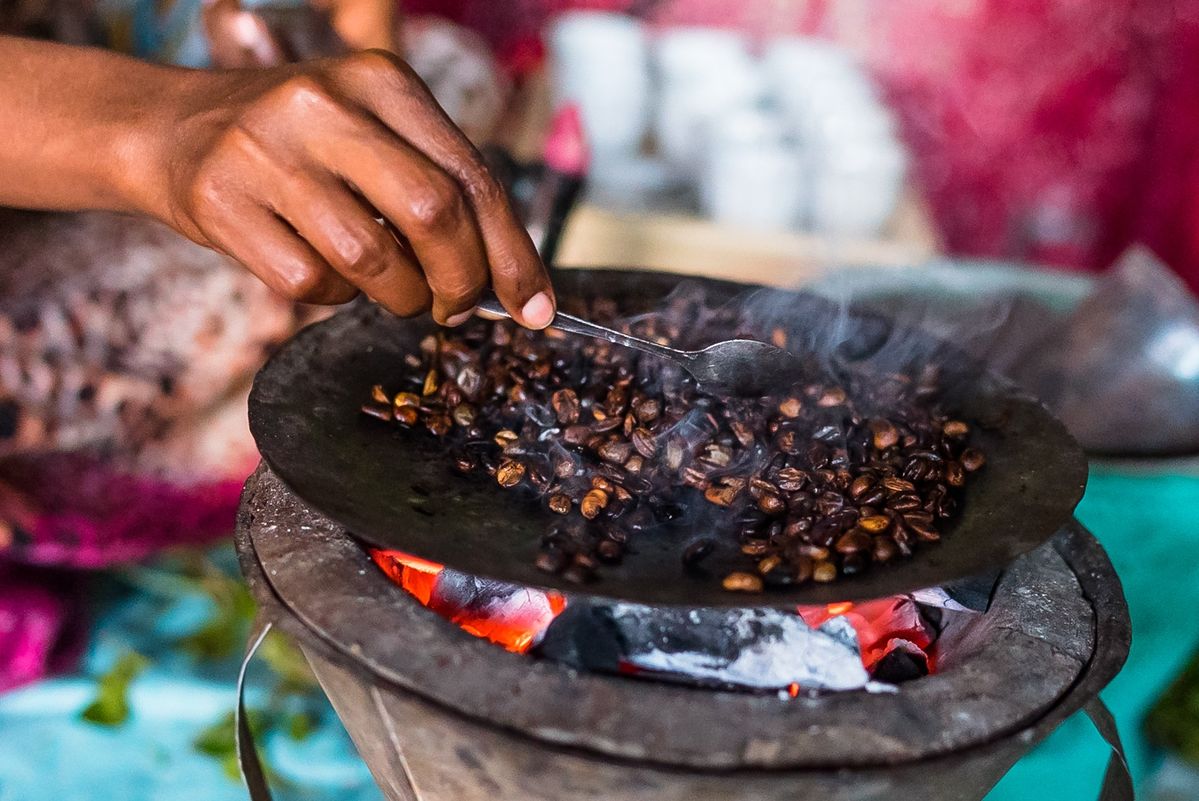
The traditional coffee ceremony, primarily conducted by the woman of the household, is a beautifully deliberate process that engages all the senses. It begins with raw, green coffee beans. The hostess washes the beans to remove the husks and then roasts them in a flat iron pan over a small charcoal stove.
As the beans darken, she shakes the pan to ensure an even roast. Once the beans reach a deep, rich brown, she walks around the room, wafting the pan so that all the guests can inhale the intoxicating aroma. This aromatic blessing is considered a crucial part of the experience.
Simultaneously, a small piece of frankincense or myrrh is placed on the hot coals. The sweet, heavy smoke of the incense mixes with the scent of the freshly roasted coffee, creating an atmosphere that feels deeply spiritual and grounded.
"Buna dabo naw" translates to "Coffee is our bread." It expresses just how essential the drink is to the sustenance of Ethiopian life.
Brewing in the Jebena
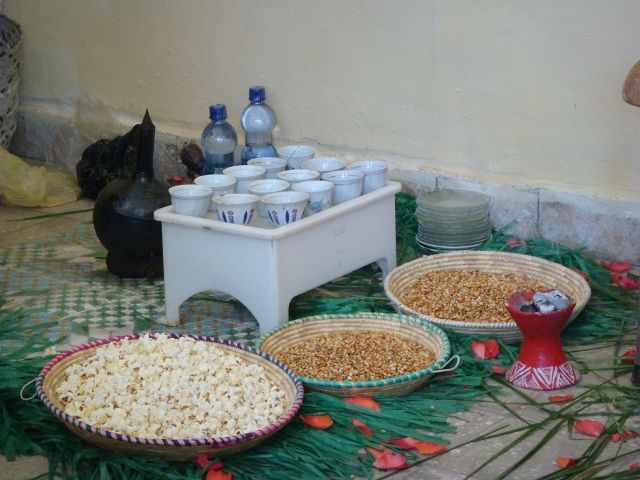
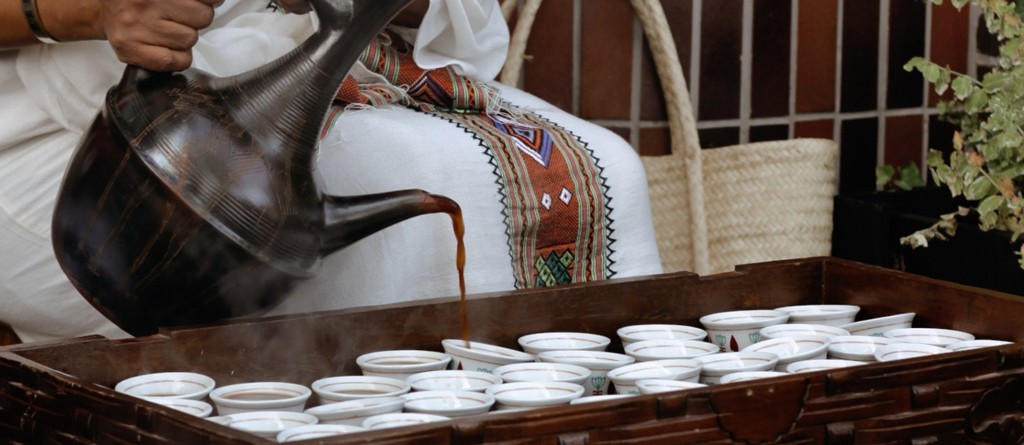
Once roasted, the beans are ground by hand using a traditional mortar and pestle (known as a mukecha and zenezena). The grounds are then slowly brewed in a beautiful, long-necked black clay pot called a jebena.
When the coffee boils, it is poured with practiced precision from a height into a tray of tiny, handle-less cups called cini. The pouring is done in a single, continuous stream without stopping, a skill that takes years to master to avoid spilling the precious liquid or disturbing the grounds that have settled at the bottom of the pot.
The Three Cups: Abol, Tona, Baraka
An Ethiopian coffee ceremony is never just one cup. It is a three-part ritual, and each round carries a specific meaning:
- Abol (The First Cup): The strongest and most robust brew. It is the conversation starter, meant to awaken the senses and bring everyone together.
- Tona (The Second Cup): Water is added back to the jebena, making the second cup slightly weaker. The conversation deepens, and social bonds are strengthened.
- Baraka (The Third Cup): The lightest cup, its name translates to "blessing." Taking this final cup is believed to bestow a blessing upon the guest before they depart.
Enjoyed with plenty of sugar (and sometimes a sprig of the herb rue, known as tena adam) alongside snacks of popcorn or roasted barley, the ceremony can easily last for two hours. In a fast-paced modern world, the Ethiopian coffee ceremony is a beautiful reminder to slow down, savor the moment, and most importantly, connect with the people around you.