From the spongy injera to the spicy doro wat, Ethiopian cuisine is entirely unique. A beginner's guide to the spices, stews, and communal dining etiquette of the Horn of Africa.
Ethiopian cuisine is not just something you eat; it is an experience you participate in. It is bold, aromatic, incredibly vibrant, and fundamentally meant to be shared. Unlike many culinary traditions that rely on individual plates and silver cutlery, Ethiopian dining is a deeply communal affair built around a massive, spongy flatbread and the warmth of eating with your hands.
If you have never experienced Ethiopian food before, the array of colorful stews and complex spice profiles can be slightly intimidating. But fear not—this guide will walk you through the essential ingredients, the iconic dishes you absolutely must try, and the beautiful cultural etiquette that surrounds every meal.
The Foundation: Injera
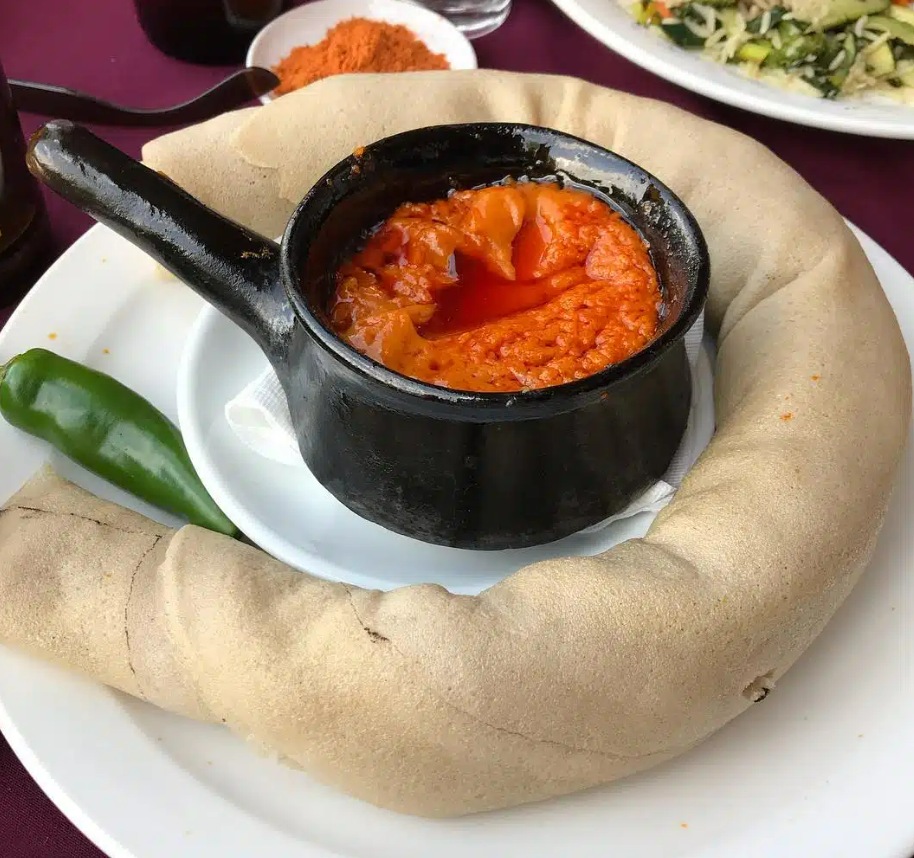
Every traditional Ethiopian meal begins and ends with injera. It acts as the plate, the serving platter, and your utensil all at once. Injera is a large, porous, slightly sour flatbread made primarily from teff—an ancient, gluten-free super-grain native to Ethiopia.
The batter is allowed to ferment for a few days, giving the bread its signature tangy flavor (similar to sourdough) and its bubbly, spongy texture. To eat, you simply tear off a small piece of injera with your right hand, use it to scoop up a mouthful of the stews arrayed in the center, and pop it into your mouth.
Injera is not just food; it is the table, the utensil, and the very foundation of Ethiopian communal life.
The Flavor Profile: Berbere and Niter Kibbeh
The unmistakable flavor of Ethiopian food comes down to two essential ingredients that are utilized in almost every non-vegan dish.
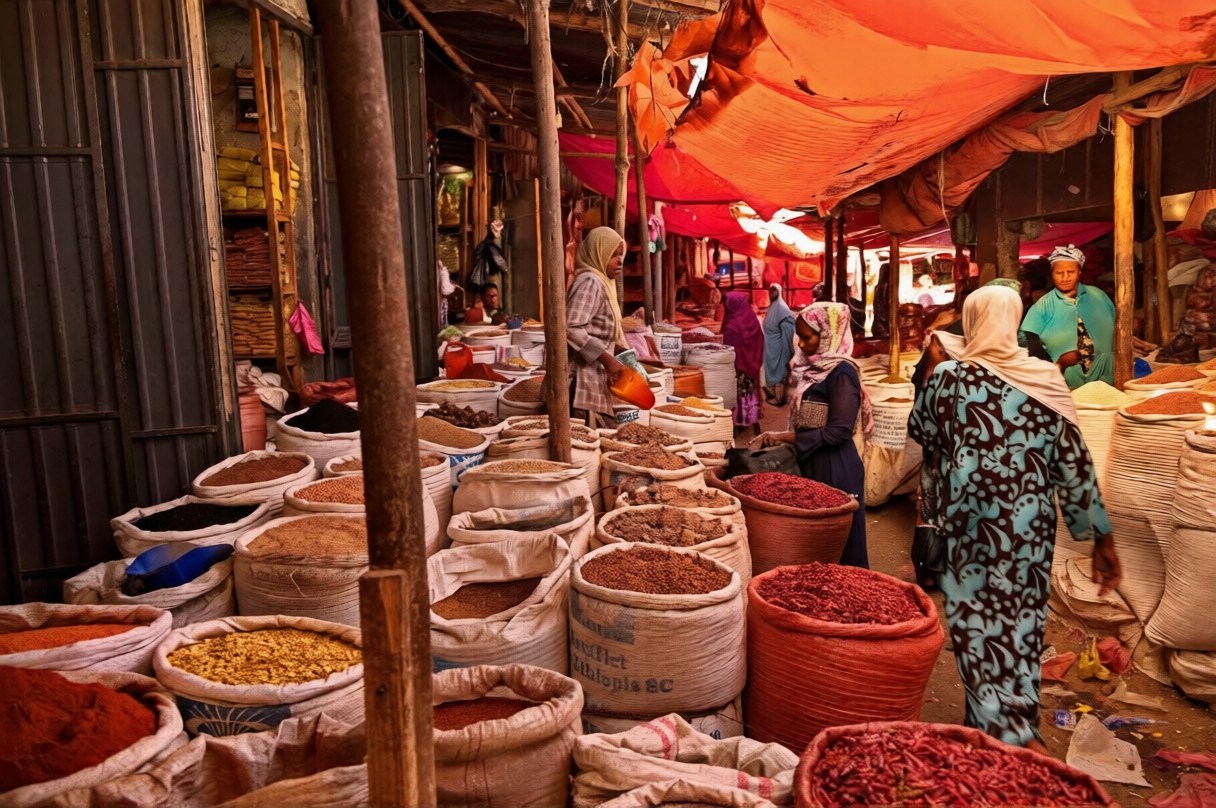
The first is Berbere, a fiery, brick-red spice blend. It is a complex mixture of chili peppers, garlic, ginger, basil, korarima (Ethiopian cardamom), rue, ajwain, nigella, and fenugreek. It provides a deep, warming heat rather than an intense, burning spice.
The second is Niter Kibbeh, a seasoned, clarified butter. Similar to Indian ghee, niter kibbeh is simmered with garlic, onions, ginger, and sacred basil, then strained. It imparts an incredibly rich, aromatic depth to meats and vegetable stews.
Iconic Dishes You Must Try
- Doro Wat: Widely considered the national dish of Ethiopia. It is a rich, dark red chicken stew made with a massive amount of slow-cooked red onions and berbere. It is typically served with a hard-boiled egg scored to soak up the juices.
- Shiro Wat: A smooth, savory stew made from powdered chickpeas or broad beans, minced onions, garlic, and depending on the variation, ground ginger or chopped tomatoes. It is a staple during fasting days.
- Tibs: Sautéed chunks of meat (usually beef or lamb) cooked with onions, garlic, jalapeños, and rosemary. It can be served mild or spicy, and is often brought to the table sizzling on a clay dish with hot coals.
- Beyaynetu: The ultimate vegetarian/vegan sampler platter. A colorful array of lentil stews (misir wat), split peas (kik alicha), collard greens (gomen), and cabbage (tikel gomen) arranged beautifully on a single injera.
The Art of Gursha
Finally, you cannot understand Ethiopian food without understanding the concept of gursha. A gursha is an act of feeding someone else a morsel of food with your own hand. It is a profound gesture of hospitality, friendship, and love.
During a meal, a host or a friend might roll a particularly delicious bite of meat and sauce into a piece of injera and gently place it directly into your mouth. It is considered polite to accept a gursha, and even more polite to return the favor. Through the shared injera and the sharing of gurshas, the boundaries between diners dissolve, making an Ethiopian meal one of the most heartwarming dining experiences in the world.